Rolls-Royce plans to hand Bell Textron two engines for the first Future Long-Range Assault Aircraft prototype within "the next few months," a company executive said this week, while the Army confirmed the aircraft will not fly before the end of 2026.
Scott Ames, who leads the Rolls-Royce engine effort for the program, spoke on the sidelines of the Association of the U.S. Army's annual conference in Washington, according to Aerospace America. One flight test engine is finished and waiting for a test stand slot once the current round of development testing wraps up, he said. "It's sitting in the hallway, ready to fire up," Ames said. The second is still being retrofitted and will come "shortly thereafter."
A later first flight
In 2024 the Army had targeted a first prototype flight in 2026 and initial fielding in 2030. A service spokesperson said Wednesday that the first flight will not happen this year and that the Army is doing a "comprehensive schedule risk assessment" to set a timeline that fits its budget.
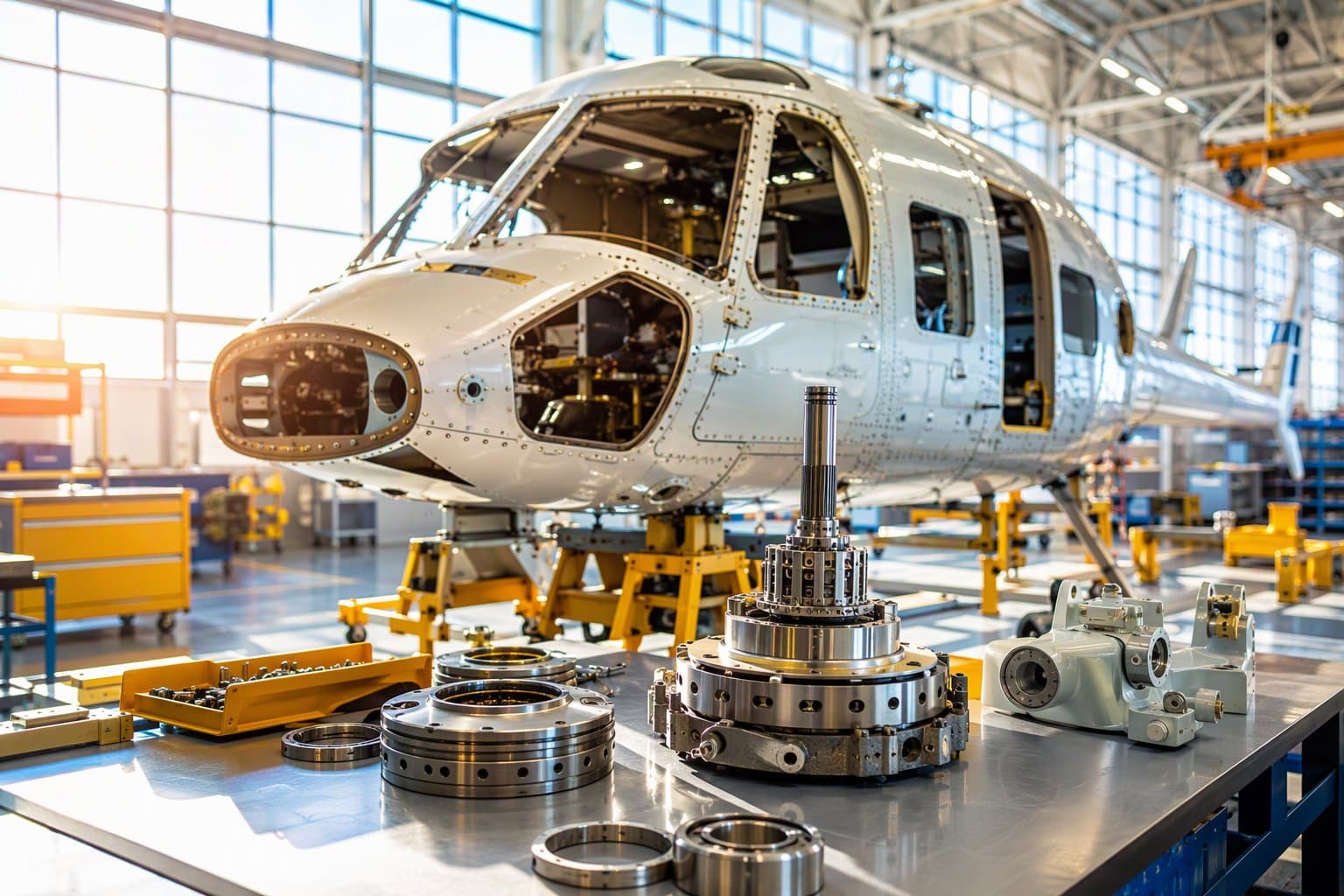
A Bell spokesperson said the company finished the nacelle and wing structures for the test aircraft over the past year, that the fuselage is close to done, and that software integration work at its Weapon Systems Integration Lab will run into next year.
The engine
Bell chose Rolls-Royce in 2019 to power its entry in the competition. The Army picked Bell's design in 2022 with a $1.3 billion award, and the aircraft was later named the MV-75 Cheyenne II. Ames would not say what the Rolls-Royce contract is worth or how many engines are expected to be built.
The tiltrotor uses two AE1107 turboshaft engines, built around the same core that powers the V-22 Osprey but with a different way of connecting to the rotor. Rolls-Royce also built a new digital engine controller, known as FADEC, which Ames said has extensive cyber protections. The controller counts as part of the engine system but will be mounted in another part of the aircraft. Its hardware and software are being tested with the first developmental engine at the Rolls-Royce plant in Indianapolis.
Another round of engine tests is due to start next week to gather more performance data, Ames said, and a developmental engine will later go through altitude testing at a specialized site in West Lafayette, Indiana. Rolls-Royce is also finishing a new infrared suppressor, mounted behind the engine to cut its heat signature, for the prototype. Several more flight test engines are being assembled, he said.
Source: Aerospace America (aerospaceamerica.aiaa.org).
Sources
aerospaceamerica.aiaa.org